

Fragments from the Waning World has been available for a few days now on streaming platforms and on Cyclical Dreams' Bandcamp.
Even though I've already written quite a bit about the rather unusual production process behind this album inspired by the stories of H. P. Lovecraft, I couldn't pass up the opportunity to write one more post-release article as a sort of production retrospective.
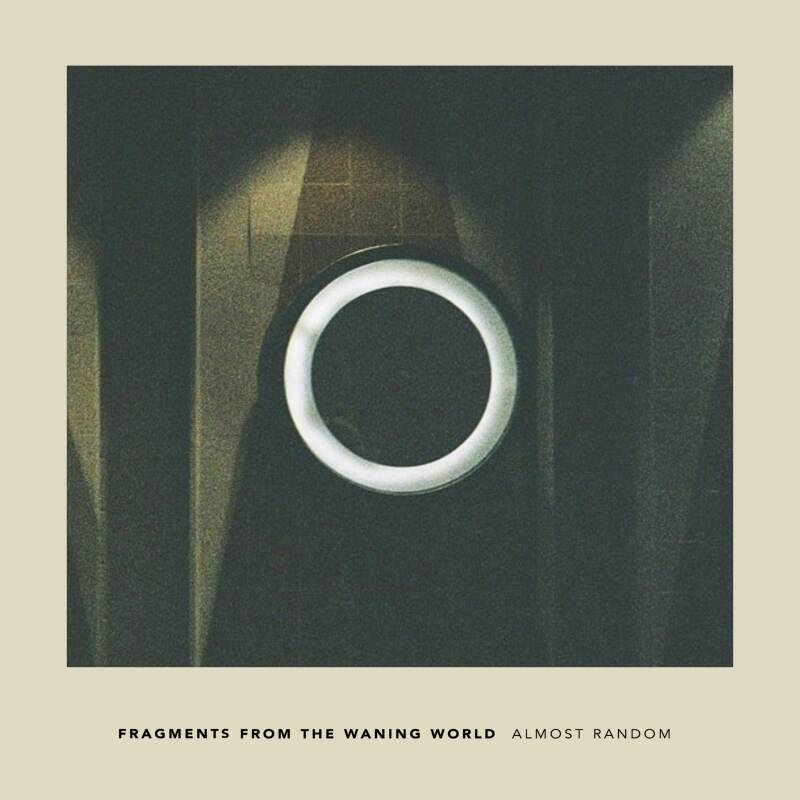
Artwork : Amp Puttinpong / Cyclical Dreams
Those who have been following the project probably realized that this album came almost out of nowhere, thanks to a fortunate combination of chance, reading, inspiring encounters, and a constant willingness to accept that not everything can be controlled—especially within a workflow that doesn't make it easy to go back and change things.
There are certainly plenty of imperfections throughout this album: slightly out-of-tune drones, unexpected resonances, or rhythms that drift... but I'm convinced that's also what makes it interesting. The goal is to surprise the listener, to guide them through a strange and baroque imaginary world without losing them, rather than trying to follow current sonic trends.
At times it may be a bit extreme, but the artistic direction always remains clear. Just like on the previous album, it's up to the listener to create their own story and use the soundscape to build their own narrative.
Here, Lovecraft is everywhere or, at least, I hope so.
But, just as in his fiction where so much is left unsaid, the listener's imagination has to take over and complete the picture, using the imperfections, the missing pieces, and the gaps in the puzzle.
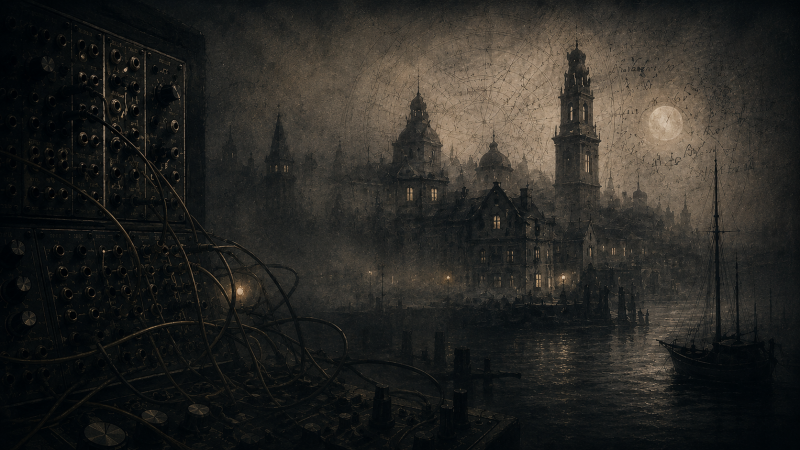
Unlike TIME DOES NOT EXIST, the production of FRAGMENTS FROM THE WANING WORLD was much smoother: no switching DAWs halfway through the project, no uncertainty about which effects to use, a clear artistic direction once it had been established, and far fewer questions about choosing one recording over another.
The experience I gained while making the first album clearly made everything easier because I knew what I wanted to achieve and, more importantly, how to get there.
I also stopped questioning myself as soon as I decided to work with the raw sonic material I already had, even if it meant sculpting it extensively to achieve the result I was after.
The main lesson I took away from this project is simple: don't hesitate to cut, discard, reuse, embrace imperfections, or even build around them—they often lead somewhere interesting.
Don't obsess over insignificant details either, and most importantly, decide when a track is finished.
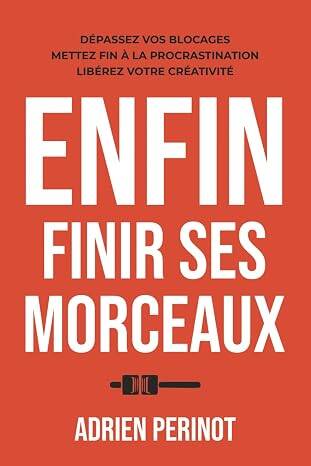
Adrien Perinot wrote an excellent book (soon in english) about this very subject: finishing your music. He explains in detail the many psychological barriers that make such a simple decision surprisingly difficult.
Ultimately, deciding that a piece is finished, that it says what you wanted it to say and deserves to be shared, allows you to move on instead of endlessly polishing insignificant details that quickly destroy any creative momentum.
Because spending too much time chasing an idealized form of perfection is probably the best way to never release anything and, in the end, accumulate frustration.
So even though, looking back, I sometimes think I should have made different artistic choices, the six tracks on FRAGMENTS FROM THE WANING WORLD are what they are, permanently, just like the ones I released last year on the previous album.
If I were to remake them today, they would sound very different: mixed differently, structured differently, with different sonic textures. Tastes constantly evolve, experience accumulates, and artistic approaches never stop changing.
That's probably the most important lesson I've learned from producing these two albums: pursuing a perfect track—one that feels completely satisfying in every respect after countless hours of mixing—is an endless and ultimately futile quest.
Tracks that are refined for days on end, sequence after sequence, layer after layer, eventually become exhausting and lead us into an endless cycle of revisions, each one bringing new doubts and creative dead ends if we lose sight of what we originally set out to achieve.
And unfortunately, the more time we spend on a track or on an entire album, the harder it becomes to stay true to the original vision that inspired the project in the first place.
So I believe the key to finishing a piece of music is to know, from the very beginning, exactly what you want to achieve—and stick to it.
Never try to make it bigger, better, or different just for the sake of it. Stay faithful to your original goal and, once you've reached it, move on to the next piece, even if you're not completely satisfied.
The real challenge is probably accepting that you can get as close as possible to your target without necessarily reaching it, because that ideal version may simply be out of reach.
After all, you'll do better next time. I'm certain of it.
